


Weighing‑Type Stretch Wrapper vs Standard Stretch Wrapper: When to Combine Pallet Weighing & Wrapping in One Station
Release time: 2026-09-29
Table of Contents
Pallet wrapping is an important step in protecting goods during storage, handling, and transportation. In some operations, however, wrapping is only one part of the final packaging process. The pallet may also need to be weighed for export documentation, freight calculation, warehouse verification, or logistics management.
This creates two main equipment choices: a standard stretch wrapper for pallet stabilization, or a weighing-type stretch wrapper that combines weighing and wrapping in one workstation. The better option depends on the company’s pallet flow, weighing requirements, production volume, and data-management process.
What Is a Standard Stretch Wrapper?
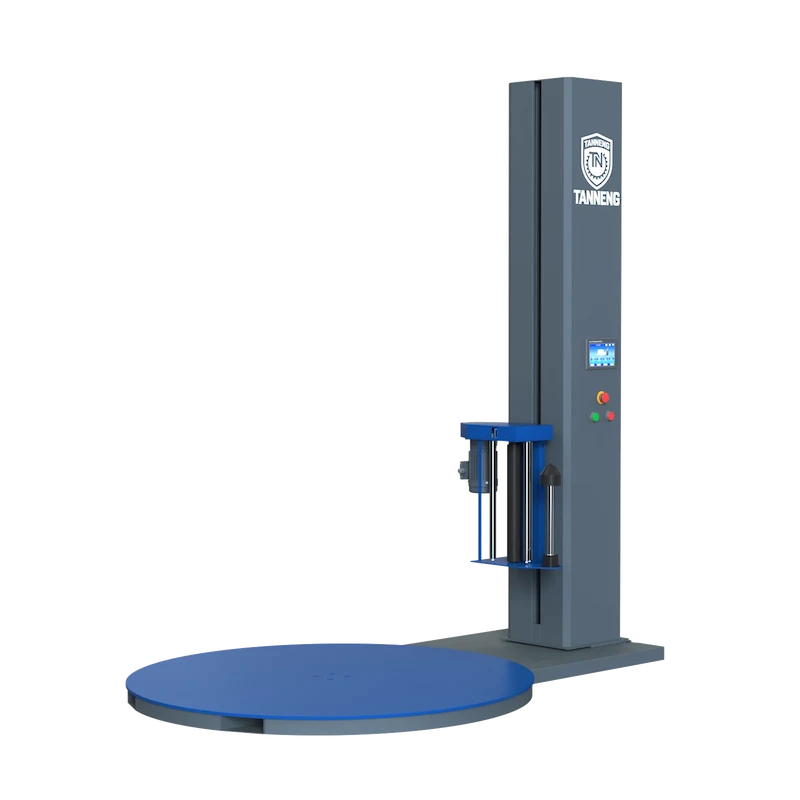
A standard stretch wrapper is designed mainly to apply stretch film around a palletized load. Depending on the machine configuration, it may include a turntable, film pre-stretch system, adjustable wrapping programs, automatic height detection, and automatic or semi-automatic film cutting.
Its main functions are to:
- Stabilize cartons, bags, boxes, and other palletized goods.
- Reduce manual wrapping work.
- Apply consistent film tension and wrapping patterns.
- Reduce the risk of load shifting during handling and transportation.
- Improve packaging efficiency in factories, warehouses, and distribution centers.
A standard wrapper is usually suitable when pallet weight has already been recorded earlier in the process or when weighing is not required for every shipment. It can also be a practical choice when the warehouse already has an independent scale for receiving, shipping, or inventory control.
What Is a Weighing-Type Stretch Wrapper?
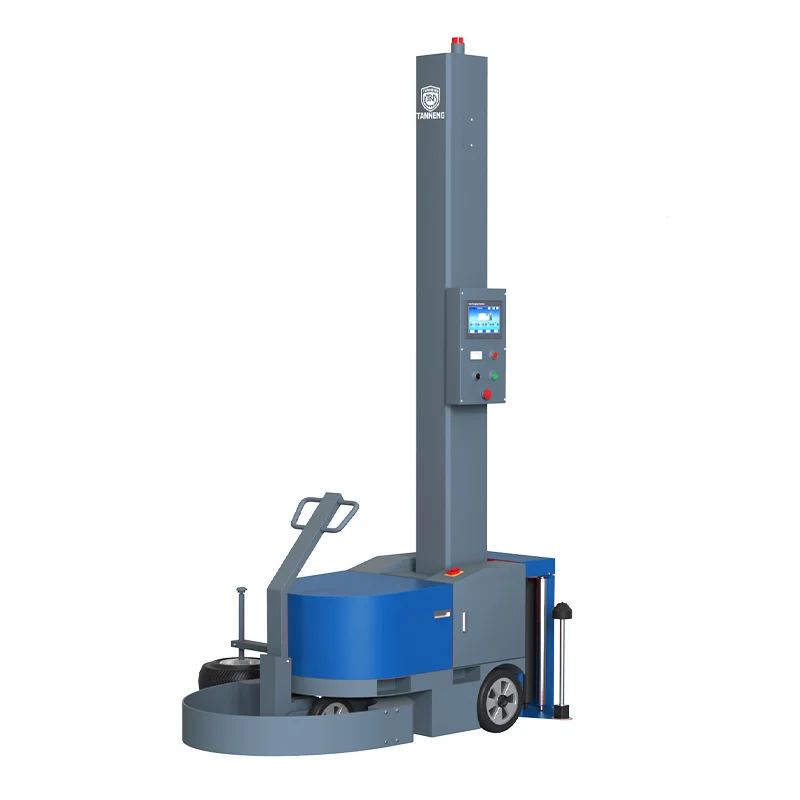
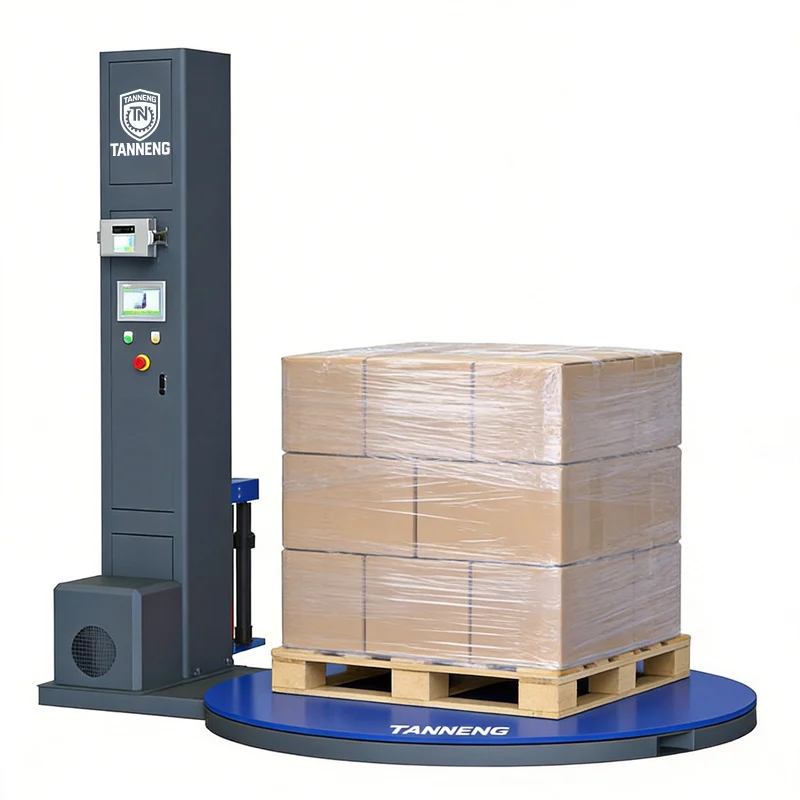
A weighing-type stretch wrapper combines pallet wrapping with an integrated weighing platform. After the pallet is positioned on the machine, the system can measure the load and apply stretch film within the same operating sequence.
Depending on the configuration, the machine may support:
- Integrated pallet weighing.
- Digital weight display.
- Weight recording.
- Label printing.
- Shipment verification.
- Warehouse or logistics-system communication.
- Automatic wrapping after load detection.
- Combined weighing and wrapping procedures.
The purpose is to connect load stabilization and weight verification at a point where the pallet is already being prepared for storage, handling, or shipment.
Key Difference Between the Two Systems
The primary difference is the scope of the operation.
| Evaluation factor | Standard stretch wrapper | Weighing-type stretch wrapper |
|---|---|---|
| Main function | Pallet wrapping | Pallet wrapping and weighing |
| Equipment layout | Weighing may require separate equipment | Weighing platform is integrated |
| Best suited for | Wrapping-focused operations | Shipping, receiving, sorting, and inventory workflows |
| Pallet handling | May require transfer to a separate scale | Fewer transfers between stations |
| Data collection | Weight is recorded separately | Weight can be captured during wrapping |
| Initial investment | Usually lower | Usually higher |
| System integration | Simpler | May require data or label integration |
| Main benefit | Efficient load stabilization | Load stabilization with weight verification |
Neither machine is automatically better. A weighing-type system offers additional functions, but those functions create value only when pallet weight is important to the company’s daily workflow.
When Should Weighing and Wrapping Be Combined?
Combining pallet weighing and wrapping is most useful when the pallet reaches a key control point before shipment, storage, or system registration.
Export Customs Weighing
For international shipments, the final pallet weight may be needed for export customs weighing, freight booking, shipping documents, or customer records. Weighing the completed pallet after wrapping can help ensure that the recorded value reflects the products, pallet, packaging materials, and stretch film as shipped.
A weighing-type station may be suitable when:
- Pallets are shipped directly to overseas customers.
- Freight charges depend on actual shipment weight.
- Different products are consolidated on one pallet.
- Weight declarations are prepared close to dispatch.
- The company wants to reduce manual weight-recording errors.
Cargo Sorting and Measurement
Warehouses and distribution centers may classify or route pallets according to weight. Weight data can support:
- Carrier selection.
- Loading sequence.
- Storage-location assignment.
- Handling-equipment selection.
- Freight grouping.
- Distribution-center sorting.
When many pallets pass through the same area, combining weighing and wrapping can reduce repeated forklift or pallet-jack movements. The pallet can be wrapped, measured, and transferred to the next process with fewer handling steps.
Warehouse Receiving Verification
In warehouse receiving, the actual pallet weight may be compared with purchase orders, delivery records, packing lists, or warehouse management data.
A weighing-type station can help identify:
- Missing units.
- Incorrect quantities.
- Mixed pallets.
- Packaging differences.
- Unexpected loading errors.
- Weight discrepancies between supplier and receiving records.
For warehouses handling frequent inbound pallets, integrated weighing can support faster receiving checks without requiring every load to move to a separate scale.
Cross-Border E-Commerce Pallet Shipments
Cross-border e-commerce operations often handle mixed products, frequent order changes, and time-sensitive dispatch requirements. Full pallets may be shipped to overseas distribution centers, fulfillment partners, or logistics hubs.
A weighing-type stretch wrapper can support:
- Final pallet weight confirmation.
- Shipment grouping.
- Freight-cost control.
- Dispatch verification.
- Label preparation.
- Better coordination with logistics providers.
This is especially useful when pallet contents change frequently and the final weight cannot be confirmed accurately earlier in the packing process.
When Is a Standard Stretch Wrapper Enough?
A standard system may be the better choice when weighing is not a regular part of the wrapping workflow.
Weight Is Recorded Earlier
If products are weighed during filling, batching, palletizing, or quality inspection, another weighing step may not create meaningful value. A standard wrapper can then focus on load stability and packaging efficiency.
Pallet Contents Are Standardized
When every pallet contains the same product quantity and packaging configuration, the expected weight may be calculated and verified through existing production records.
An Independent Scale Is Already Available
Some facilities already use floor scales, warehouse scales, or truck scales. In this situation, a standard stretch wrapper may be easier to maintain while the existing weighing equipment continues to handle official weight verification.
Wrapping Speed Is the Main Priority
If the wrapping station is designed for high-volume, continuous production and weighing is not required for every pallet, a standard machine may provide a simpler process with fewer additional data-management requirements.
Investment and Maintenance Need to Remain Simple
A standard wrapper usually has fewer components than a combined weighing and wrapping station. This can help control initial investment and simplify troubleshooting in applications where weighing is occasional.
Benefits of Combining Weighing and Wrapping
When the application justifies it, an integrated station can provide several practical benefits.
Fewer Pallet Movements
The pallet does not need to move from a wrapper to a separate scale or from a scale back to the wrapping area. This can reduce forklift travel, waiting time, and the risk of load disturbance.
Better Process Consistency
A clear sequence can be established: position the pallet, confirm the weight, wrap the load, record or print the required information, and release the pallet for storage or shipment.
Improved Data Accuracy
Weighing at the final packaging stage can provide a more complete figure because the pallet includes the products, pallet base, stretch film, corner protection, straps, and other securing materials.
More Efficient Use of Floor Space
A combined station may be useful where space is limited or where two separate work areas would interrupt the material flow.
Easier Shipment Verification
The recorded weight can potentially be associated with a pallet number, product batch, customer order, or shipping label, depending on the control-system configuration.
Technical Factors to Consider
Before choosing a weighing-type machine, buyers should review more than the scale capacity.
Weighing Accuracy and Capacity
The scale should match the expected pallet weight range. Buyers should also confirm the required accuracy, display resolution, calibration procedure, and compliance requirements for the intended application.
Completed-Pallet Weighing
The company should define when the pallet must be weighed. If the objective is to record the shipment-ready weight, the process should include the pallet, products, stretch film, corner protection, straps, and other securing materials.
Pallet Positioning
The weighing platform must provide sufficient support for the pallet footprint. Uneven positioning, contact with nearby structures, debris under the platform, or excessive pallet overhang may affect measurement reliability.
Data and Label Requirements
Determine whether the weight must be printed on a label, stored in a warehouse system, transferred to an enterprise resource planning system, or included in shipping documentation.
Throughput and Cycle Time
Integrated weighing should not create a bottleneck. The complete cycle should include pallet positioning, weight stabilization, wrapping, film cutting, data recording, and unloading.
Calibration and Maintenance
A weighing platform adds another system that requires inspection and calibration. Maintenance responsibilities should be clearly defined, especially when the recorded weight is used for freight billing, customs documentation, or contractual verification.
Choosing the Right Machine
| Operating condition | More suitable option |
|---|---|
| Wrapping is the only required operation | Standard stretch wrapper |
| Weight is recorded upstream | Standard stretch wrapper |
| Pallets require final export weight verification | Weighing-type stretch wrapper |
| Mixed pallets need final measurement | Weighing-type stretch wrapper |
| Warehouse receiving requires weight comparison | Weighing-type stretch wrapper |
| Pallets are sorted according to weight | Weighing-type stretch wrapper |
| An independent scale is already available | Standard stretch wrapper may be sufficient |
| Floor space is limited and weighing is frequent | Weighing-type stretch wrapper |
| Maximum wrapping speed is the main priority | Standard stretch wrapper may be more suitable |
| Weight data must connect with labels or logistics software | Weighing-type stretch wrapper, subject to integration requirements |
Is an Integrated Station an All-in-One Pallet Packaging Solution?
A combined wrapper and weighing system can be considered an all-in-one pallet packaging solution when it brings together pallet wrapping, weight verification, labeling, and shipment data capture in one final packaging area.
However, an all-in-one solution does not mean that every process is automatically connected. Additional conveyors, barcode readers, printers, software interfaces, or warehouse controls may still be required. Buyers should define the complete workflow and confirm which functions are included in the machine and which will be handled by external equipment.
The most suitable system is the one that removes unnecessary handling without adding complexity that the operation does not need.
Final Decision
Choose a standard stretch wrapper when the main requirement is efficient and consistent pallet wrapping, especially if weight data is collected elsewhere or is not required for every load.
Choose a weighing-type stretch wrapper when final pallet weight is important for export customs weighing, cargo sorting and measurement, warehouse receiving verification, or cross-border e-commerce pallet shipments. It is particularly useful when the pallet must be weighed after final packing and before dispatch.
TANNENG provides standard and weighing-type pallet wrapping equipment for different industrial, warehouse, logistics, and export packaging requirements. The final selection should be based on pallet weight range, required accuracy, throughput, data-management needs, available floor space, and the actual position of weighing within the company’s workflow.
FAQ
What is the main difference between the two machines?
A standard stretch wrapper focuses on pallet stabilization, while a weighing-type stretch wrapper combines pallet wrapping and weighing in one station.
When should a company choose a weighing-type stretch wrapper?
It is suitable when pallet weight is needed for export customs weighing, cargo sorting, warehouse receiving verification, or cross-border e-commerce pallet shipments.
Is a standard stretch wrapper sufficient for some applications?
Yes. It is usually sufficient when weight data is recorded elsewhere or when the main requirement is efficient and consistent pallet wrapping.