


2026 Warehouse Automation Trends: Fully Automatic Inline Stretch Wrappers and Smart Conveyors
Release time: 2026-06-26
Table of Contents
As global supply chains face unprecedented pressure to deliver faster, operate leaner, and maintain higher safety standards, 2026 marks a pivotal shift in logistics management. The era of isolated manual labor and disconnected machinery is rapidly ending, making way for intelligent, interconnected robotic ecosystems. At the very heart of this industry-wide transformation is warehouse packaging automation, which has evolved from a luxury upgrade to an absolute necessity for modern distribution centers and manufacturing plants.
With ongoing labor shortages, rising material costs, and the booming demands of e-commerce, businesses are turning toward integrated smart solutions to streamline their end-of-line processes. In 2026, the focus is heavily placed on combining data-driven conveyors with advanced wrapping technology to achieve continuous, uninterrupted workflows.
The Synergy of Smart Conveyors and Continuous Flow
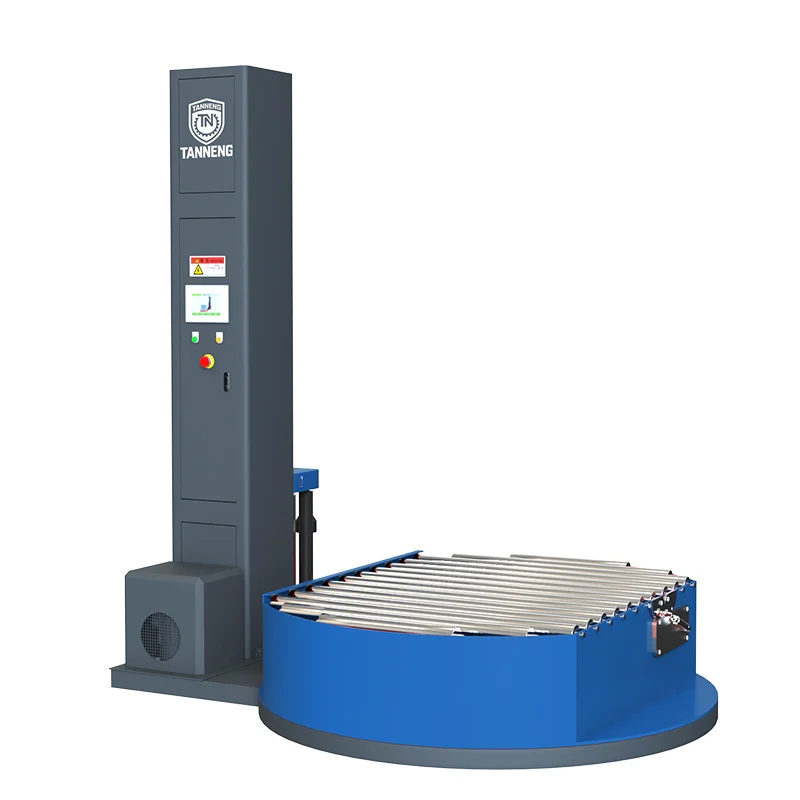
Historically, pallet wrapping was a bottleneck. Forklift drivers would transport loaded pallets to a standalone turntable, wait for the wrapping cycle to finish, and then transport the secured load to a staging area. Today, the standard for high-volume facilities is the inline pallet-wrapping system. These machines are fundamentally designed for seamless integration into existing conveyor systems, allowing loaded pallets to glide directly from the automated palletizer into the wrapping station and out to the dispatch zone without any human intervention.
Smart conveyors in 2026 are equipped with IoT (Internet of Things) sensors and connected directly to the Warehouse Management System (WMS). These conveyors can automatically detect pallet weight, height, and load stability, transmitting this data instantly to the wrapping machinery. This seamless handshake between transport and packaging minimizes downtime and creates a fluid, high-throughput environment.
High-Performance Wrapping Technologies and AI Control
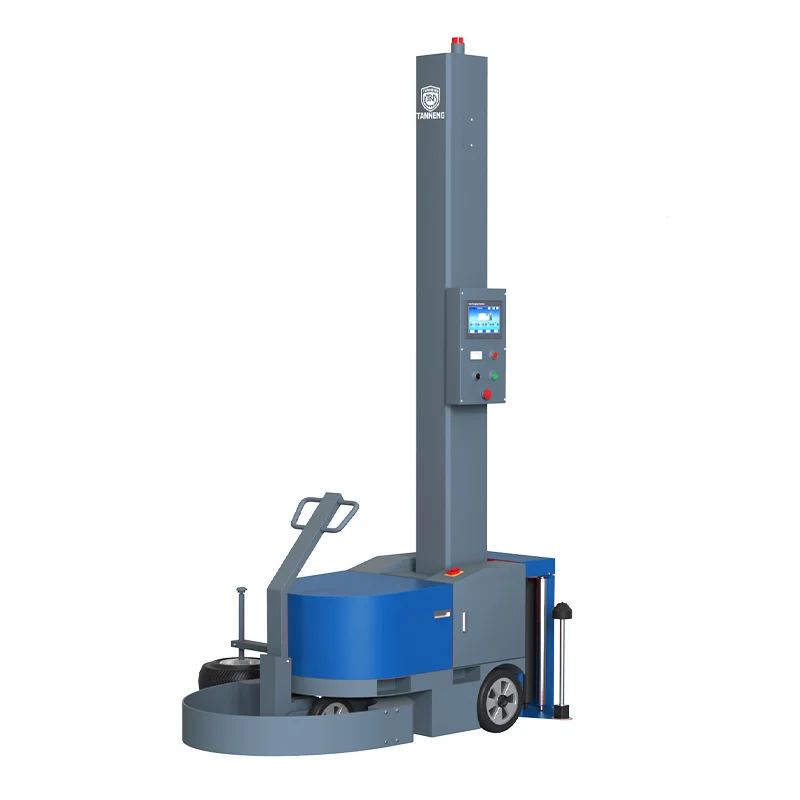
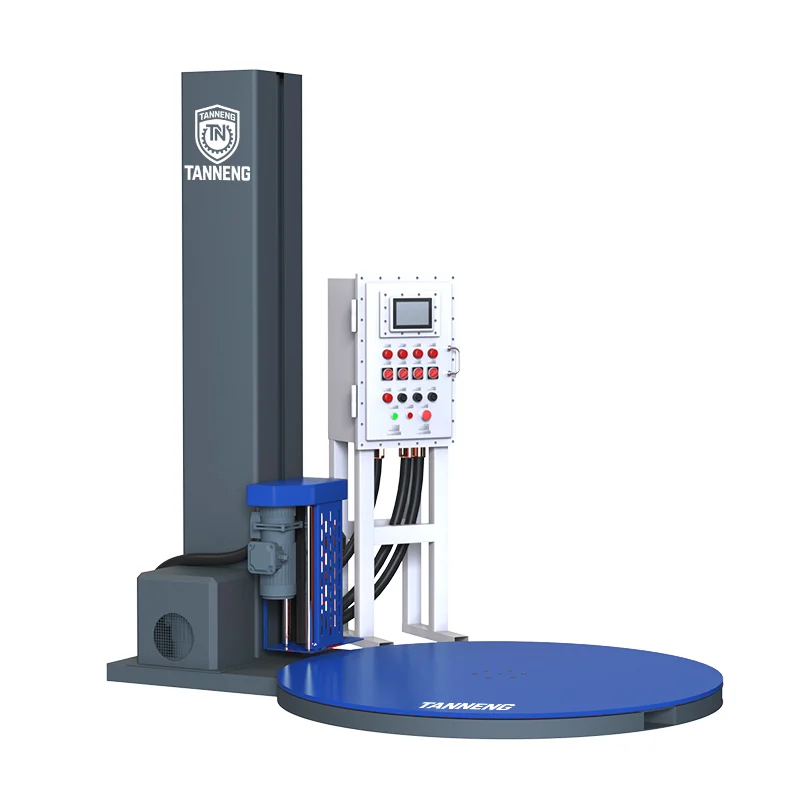
To match the speed of smart conveyors, wrapping technology has undergone massive upgrades. Enter the modern fully automatic stretch wrapper. These advanced machines boast power pre-stretch carriages capable of stretching film up to 300% or even 400%. By utilizing intelligent stretch film tension control, these systems dynamically adjust the force applied to the corners and flat sides of the load in real-time. This ensures absolute load stability while drastically cutting down on plastic waste.
Innovative brands like TANNENG are pushing the boundaries of what is possible by incorporating AI-adaptive control algorithms. Their equipment reads the dimensions and fragility of the incoming goods and instantly calibrates the wrapping parameters. This precise control is especially vital for heavy-duty palletizing for beverage and food industries, where load shifting during transit can result in catastrophic product loss and safety hazards.
Comparing End-of-Line Packaging Systems
To understand why the industry is shifting so rapidly, it helps to look at the tangible operational differences between traditional setups and 2026 standard automated configurations.
| Operational Metric | Manual / Semi-Automated Wrapping | 2026 Integrated Automated Systems |
|---|---|---|
| Throughput Capacity | 10 – 20 pallets per hour | 40 – 100+ pallets per hour |
| Labor Requirement | 1-2 dedicated forklift operators | 0 dedicated operators (fully autonomous) |
| Film Pre-Stretch Ratio | 0% – 150% (High material waste) | 250% – 400% (Maximum material savings) |
| Load Consistency | Variable (Operator dependent) | 100% Consistent (Digitally controlled) |
| Safety Profile | Moderate (Risk of forklift collisions) | High (Category 3 Safety, fenced boundaries) |
| Data Integration | None | Full WMS/WCS, real-time IoT tracking |
Maximizing ROI in High-Throughput Scenarios
Upgrading a facility requires capital, but the return on investment (ROI) in 2026 is faster than ever. Investing in cost-effective automated packaging equipment yields returns not just through reduced headcount but through massive material savings and damage prevention.
Furthermore, sustainability is no longer just a corporate buzzword; it is a strict regulatory requirement in many global markets. By reducing film waste in high-throughput distribution centers, companies achieve their ESG (Environmental, Social, and Governance) goals while simultaneously improving their profit margins. The adoption of high-speed automated stretch wrapping solutions guarantees that every single pallet is wrapped with the exact minimum amount of plastic required for maximum security, entirely eliminating operator inconsistency and over-wrapping.
Building the Ultimate Industrial Workflow
For enterprises looking to establish world-class industrial end-of-line packaging lines, the integration of automated guided vehicles (AGVs), robotic stackers, and smart wrappers provides the ultimate competitive edge. When these technologies work in unison, the facility operates like a well-conducted symphony.
The integration of advanced clamp-and-cut technologies means there are no trailing film tails, which often cause sensor errors on automated storage and retrieval systems (AS/RS). This meticulous attention to detail ensures secure pallet wrapping for high-volume logistics, allowing supply chains to operate 24/7 without unnecessary stoppages or manual resets.
Conclusion
The future of global logistics relies heavily on speed, precision, and digital connectivity. Embracing these 2026 trends allows manufacturing and distribution businesses to future-proof their operations against unforeseen market disruptions. Leading equipment manufacturers like TANNENG provide the robust, AI-driven infrastructure needed to achieve total end-of-line operational excellence. Making the strategic leap into warehouse packaging automation is no longer simply about saving labor hours; it is about building a resilient, scalable, and highly profitable supply chain ecosystem.
Frequently Asked Questions (FAQs)
1. What is the average ROI timeframe for an Inline pallet wrapping system?
For most medium to high-volume distribution centers processing over 150 pallets a day, the ROI typically ranges between 8 to 14 months. The rapid payback is driven by a combination of removing dedicated manual labor, reducing stretch film consumption by up to 50% through power pre-stretch, and eliminating costs associated with transit damage.
2. How does a Fully automatic stretch wrapper improve workplace safety?
These advanced machines eliminate the need for operators to manually attach or cut the film, keeping them away from moving parts. Additionally, they are typically enclosed within safety fencing with photoelectric light curtains and Category 3 emergency stop protocols, drastically reducing the risk of forklift-pedestrian collisions in the wrapping zone.
3. Can TANNENG equipment be integrated into my existing WMS and smart conveyor setup?
Yes. Modern automated wrapping equipment is designed with open-architecture PLC systems and communication protocols (such as Ethernet/IP or PROFINET). This allows them to seamlessly interface with existing Warehouse Management Systems, robotic palletizers, and upstream/downstream smart conveyors to create a synchronized, data-driven packaging line.