Putting a pallet wrapping machine into daily use involves more than positioning the equipment on the factory floor. Operators also need to understand the controls and how wrapping settings relate to the loads they handle.
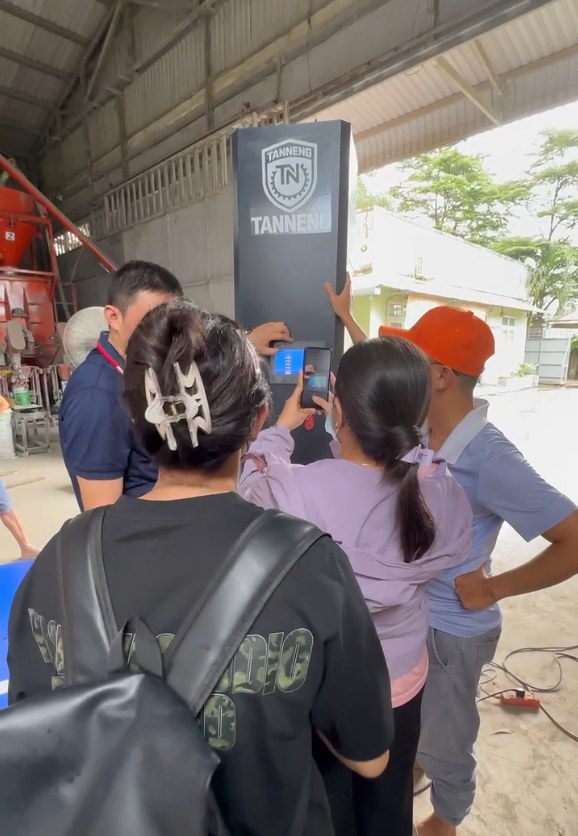
This TANNENG field case highlights the practical side of equipment familiarization. During the on-site demonstration, participants gathered around the machine’s control panel to review its operation. One participant recorded the explanation on a phone as a reference for later learning.
On-Site Pallet Wrapping Machine Demonstration
A demonstration at the machine gives participants a direct view of the interface. They can follow the explanation on the screen and connect the controls with the equipment in front of them. With several participants observing the same panel, the session provides an opportunity to build a shared understanding of machine operation.
For businesses introducing pallet stretch wrapping equipment, this familiarization is a useful step toward establishing a repeatable packaging routine.
Matching Wrapping Settings to Pallet Loads
Understanding the control panel is only part of learning to use a pallet wrapping machine. Pallet loads differ in height, weight, stacking pattern, and resistance to compression. These differences should inform the wrapping setup rather than applying the same settings to every load.
During setup and trial wrapping, useful points to review include:
- Film tension: Select a suitable setting for the load and stretch film being used.
- Film overlap: Check that coverage is appropriate across the height of the load.
- Top and bottom wraps: Assess where additional reinforcement may be needed.
- Load condition: Check stacking quality and pallet condition before wrapping.
The available adjustments depend on the machine configuration. Operators should follow the supplied operating instructions and assess the completed wrap using representative loads.
Building a Repeatable Packaging Routine
A clear operating routine helps teams apply the knowledge gained during a demonstration. Before starting, operators should check the pallet, load arrangement, film installation, and working area.
After a trial cycle, the wrapped pallet should be inspected for uneven coverage, damaged film, or visible load movement. Where adjustments are needed, settings should be reviewed before continuing with routine packaging.
Recording suitable settings for recurring load types can also give operators a useful starting point when similar goods return to the packaging area.
Practical Learning at the Machine
This case focuses on a practical stage of pallet wrapping machine adoption: helping people become familiar with the equipment they will use. The control-panel discussion and phone recording illustrate how an on-site demonstration can support continued learning.
Combined with the machine manual, supervised practice, and checks using actual pallet loads, this approach helps teams develop a more structured packaging process.
Discuss Your Pallet Wrapping Application With TANNENG
Selecting a pallet wrapping machine starts with understanding your goods and workflow. Pallet dimensions, maximum load weight, load stability, daily packaging volume, and available floor space all help define the equipment requirements.
Explore our industrial standard stretch wrap machines or packaging equipment services to learn more.
Contact TANNENG to discuss your pallet wrapping application. Share photos of your palletized goods and your packaging requirements so our team can help you assess a suitable solution.
Email: tanneng@tannengpack.com