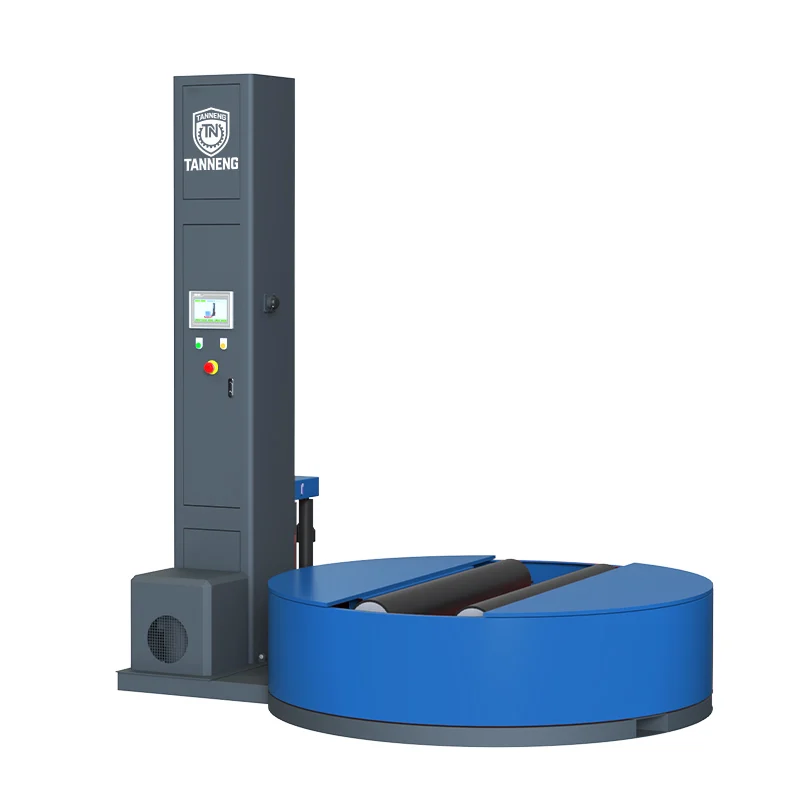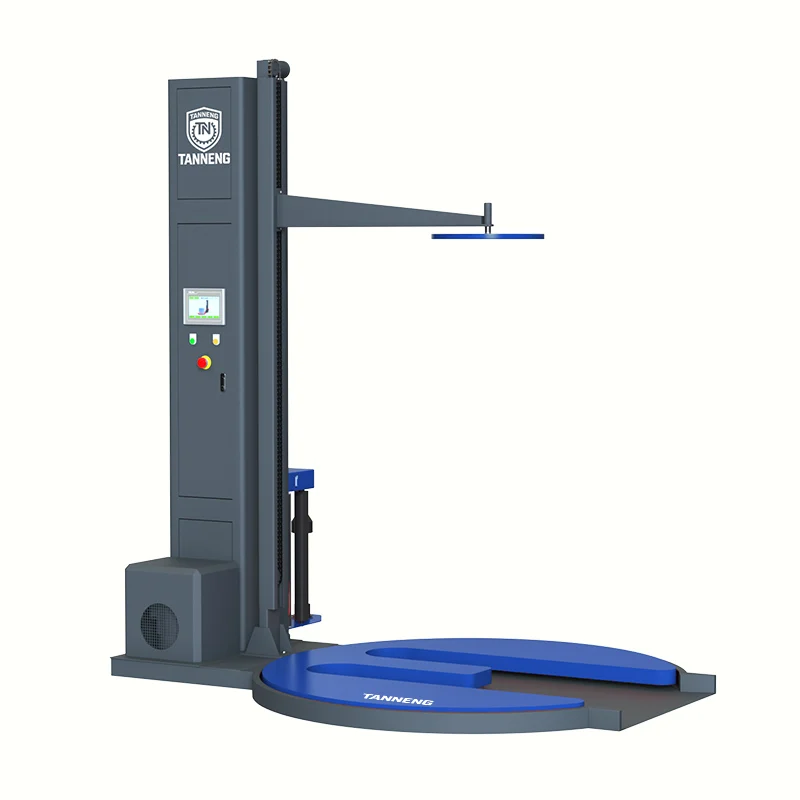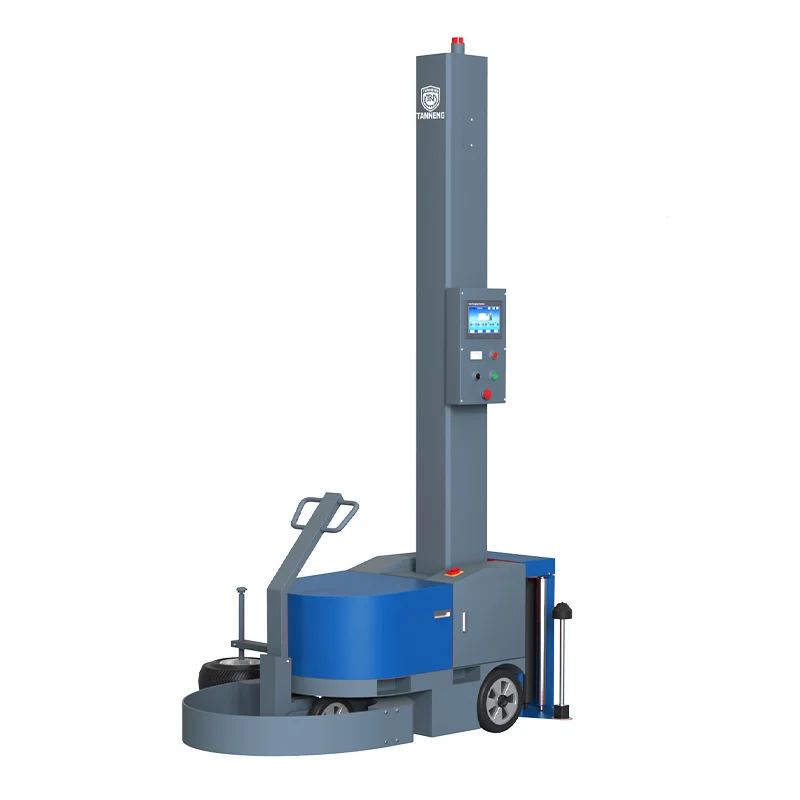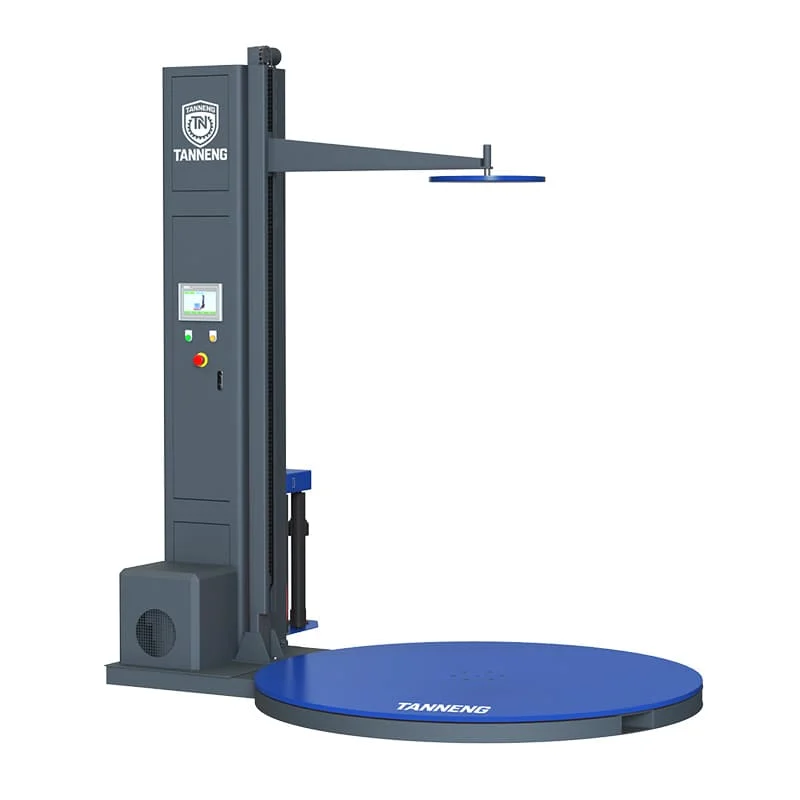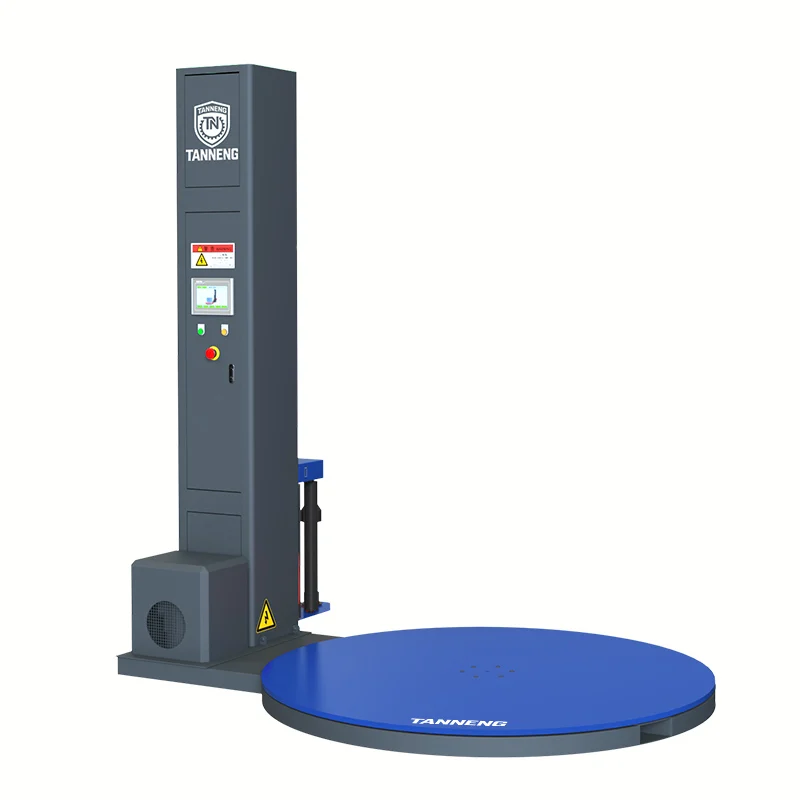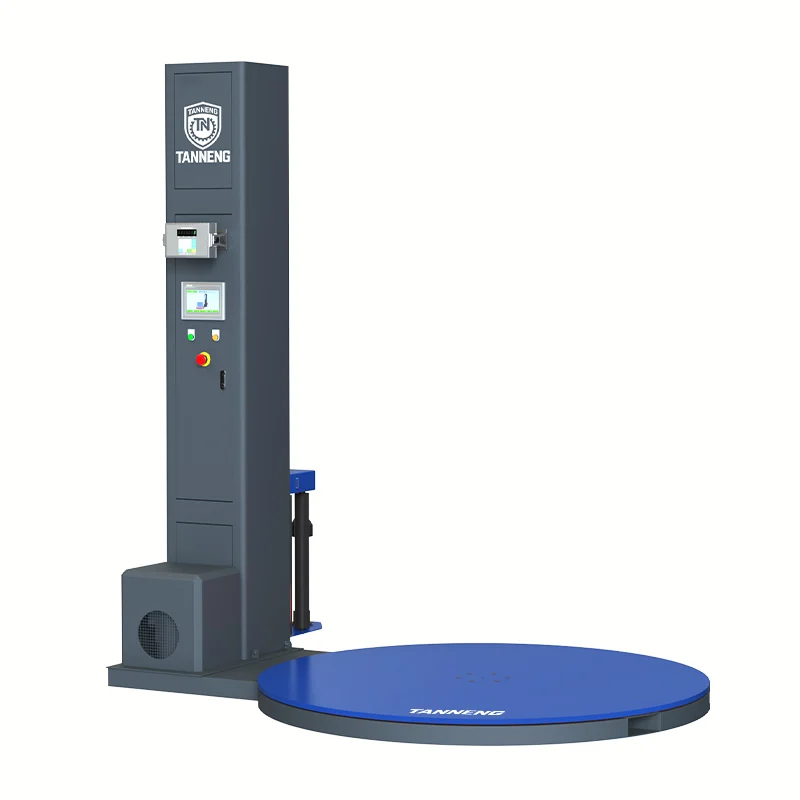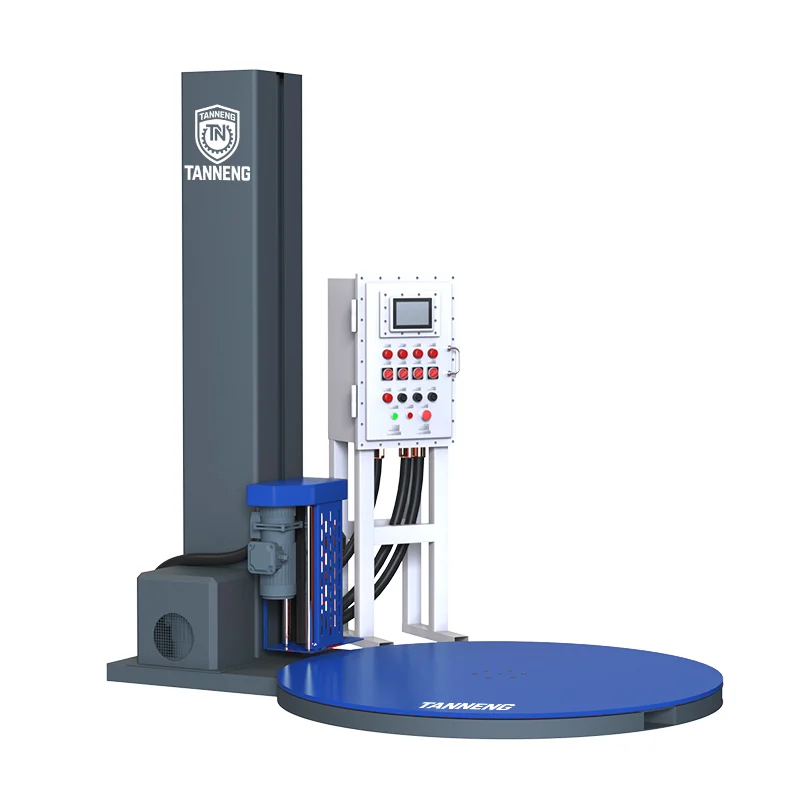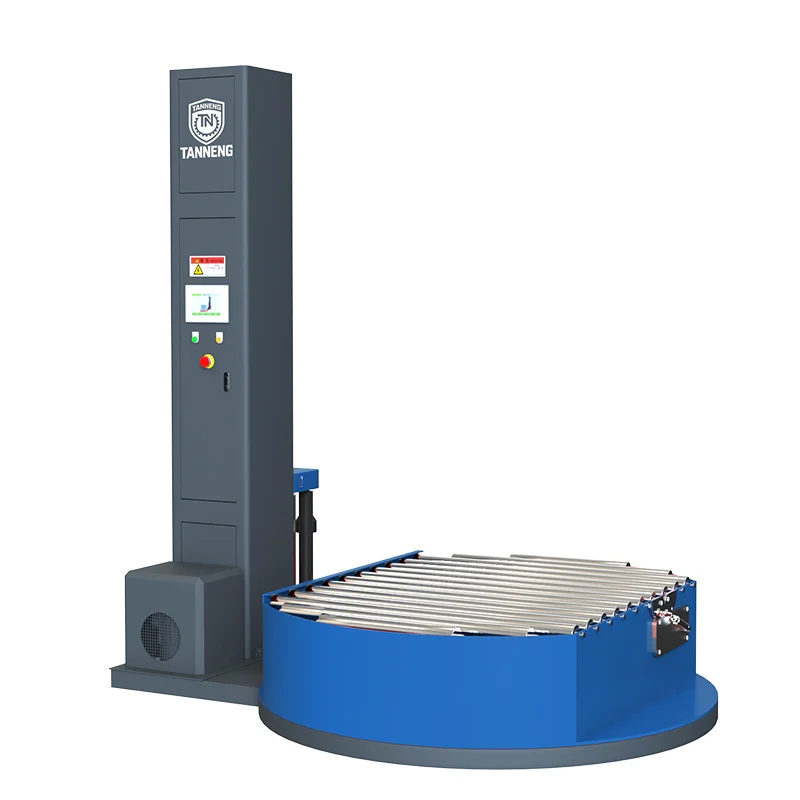

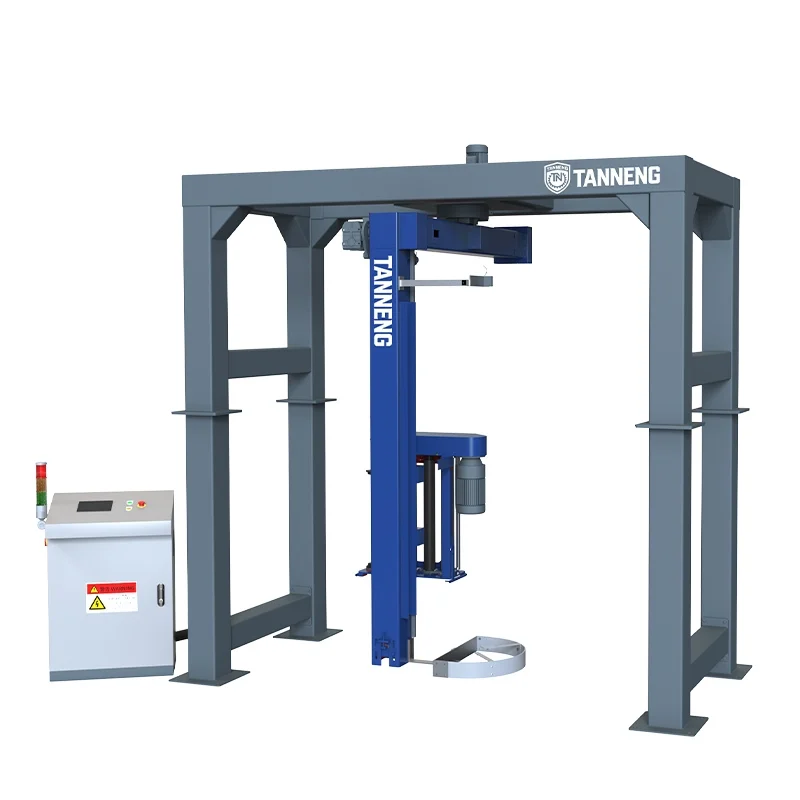
The TANNENG rotating arm stretch wrapper works with the pallet stationary and the cantilever rotating, featuring stable operation and compact layout. It is ideal for heavy, tall, unstable and special-shaped goods. Equipped with a power pre-stretch film carriage, it saves wrapping film and improves efficiency. With adjustable layers and tension, it supports automatic film cutting and pressing, widely used in logistics, building materials, chemical and other industries for automatic pallet wrapping.
Specifications:
No.
Component Name
Brand
Origin
Remarks
1
PLC + HMI
Siemens
Germany
2
Inverter
Siemens
Germany
3
Pushbuttons
Schneider
France
4
Photoelectric Sensor
Banner
Germany
5
Proximity Switch
Omron
Japan
6
Terminal Blocks
Phoenix Contact
Germany
7
Film Feeding Motor
Taili
China
8
Cantilever Motor
Guomao
China
I. Main Technical Parameters & Performance
1. Basic Parameters
Max. Wrapping Size: (1000–1200)mm × (1000–1200)mm
Conveyor Table: Width 1300mm, Height 700mm
Pallet Size: 1200×2000×100mm
Wrapping Height: 700–2000mm (max)
Wrapping Speed: 20–40 pallets/hour (depending on cargo size)
Cantilever Speed: 15 rpm
Net Weight (Main Unit): 2000kg
2. Cantilever Drive Unit (1 set)
Motor with VFD speed regulation and brake
Cantilever Reducer: GUOMAO
Power: P=1.5kW, N=37rpm
Cantilever Speed: 10–20rpm (VFD adjustable, with brake)
Cantilever with guiding device
Cantilever equipped with 2 fixed limit blocks and movable limit blocks at both ends
3. Film Carriage Lifting Unit (1 set)
Lifting by chain drive, stable and reliable
Lifting Reducer: Worm gear reducer
Motor Power: 0.37kW
Lifting Reducer: P=0.37kW, N=14rpm
4. Frame Unit (1 set)
Gantry-type four-column square steel structure
Transmission mechanism installed on the top of frame
Cantilever fixed on the support via slewing bearing
Slewing Bearing: QWB350
5. Film Carriage Unit (1 set)
Photoelectric switch for automatic height detection
AC VFD drive system
Motor Power: 0.37kW
Stretch Ratio: 1:3; film feeding speed adjustable
Film carriage follow-up mechanism, safety protection for film replacement door
Film feeding swing arm rotation; proximity switch controls motor start/stop for film follow-up
Transmission: Chain drive
II. Safety Interlock System
Cantilever start interlocked with conveyor line
III. Packaging Material
LLDPE Stretch Film
Thickness: 20–30μm
Core Inner Diameter: 76.2mm
Max. Outer Diameter of Film Roll: 260mm
IV. Control System
PLC programmable control; wrapping layers and cycles adjustable
Photoelectric switch for automatic cargo height detection
Chain drive for film carriage, precise positioning
Film System:
Power pre-stretch mechanism, stretch ratio up to 300%
Separate adjustable speed for film carriage up/down and film feeding
Automatic/manual switch for stable operation
FAQ:
Why does stretch film easily break when wrapping?
There are three common reasons: (1) the tension of the stretch film is set too high; (2) the film is thin, brittle, or damaged; (3) the film carriage or roller is stuck, causing uneven force. The solutions are to appropriately reduce the tension, use high-quality stretch film, and clean the guide rollers.
What should I do if the goods in the package are loose?
(1) Increase the stretch ratio of the film to achieve tighter packaging; (2) Slow down the hoist speed of the rack to improve film overlap; (3) Check if the pre-stretch mechanism is working properly without slipping; (4) Wrap 2–3 more layers at the bottom of the goods to better secure them.
Why does the turntable not rotate or run slowly after starting?
First, check whether the emergency stop button has been reset and whether the inverter parameters have been incorrectly adjusted. Then check if the chain or belt is loose or slipping, and whether the motor is abnormal. Low-speed force is usually caused by a low inverter current setting or the brake not being released; readjust the parameters to correct it.
How to deal with increased noise after long-term use?
The main reasons are insufficient lubrication or loose parts. (1) Lubricate the turntable bearings, chains, and gears; (2) Tighten loose screws, film holders, and covers; (3) Clean debris under the turntable to avoid friction noise. Regular maintenance can greatly reduce noise.